

Natural Capital
TCS recognises environmental protection as essential to long-term value creation, reflecting the Tata Group’s commitment to environmental stewardship, embodied in Project Aalingana. TCS focuses on minimising environmental impacts by embracing Aalingana’s interlinked pillars: driving the decarbonisation of its businesses and value chain; applying a systemic, circular economy approach to reduce resource use and waste; and preserving and restoring the natural environment. TCS’ Natural Capital approach emphasises efficient use of resources, protection of ecosystems, and integration of environmental considerations into operational decision-making.
Driving net zero
Driving the decarbonisation of its operations
84% reduction in Scope 1+2 compared to base year
26% reduction in Scope 3 compared to base year
Pioneering circular economies
Applying a systemic, circular economy approach to reduce resource use and waste
99% of treated water reused in owned campus
9 TCS campuses have achieved ZWL Certification
97% food waste treated in biodigesters and organic waste converters in owned campuses.
Preserving nature and biodiversity
Preserving and restoring the natural environment
Released TCS Nature and Biodiversity Policy
Preservation and Conservation of :
590+ species of flora
180+ species of fauna

Energy Management and GHG Emissions Reduction
TCS’s decarbonization journey is supported by green buildings, operational energy efficiency, green IT, renewable energy transition, and carbon mitigation instruments.

Initiatives for reduction of Scope 1 and Scope 2 emissions:
Energy Efficiency and Optimisation
- New campuses designed as per green building standard and innovative technology used.
- Optimize operational energy efficiency with real-time monitoring and controls.
- Upgrade legacy equipment/utilities.
Green IT
- Procurement of energy efficient IT equipment.
- Data center and distributed IT power management.
- Data center cooling strategy.
- Investment in Sustain POD and Hyper Converge Infrastructure (HCI).
Greater use of Renewable Energy
- Maximize roof top solar capacities and RE procurement.
Initiatives for reduction of Scope 3 emissions:
Employee Commute
- Transition to transport fleet of EV cabs.
- Employee engagement for use of public transport.
Business Travel
- Reduce business travel through use of collaborative tools and technology.
Supplier engagement
- Use of supplier specific emission factors for category 1 and 2 where available and supplier engagement for supply chain decarbonisation.
Reduced Energy
consumption and .....
.....Increased use of
Renewable energy
.....reduced TCS’ Carbon footprint.

Water Management
TCS focuses on reducing freshwater withdrawal through recycle and reuse initiatives, sewage treatment, enhancing water-use efficiency, and rainwater harvesting. Special emphasis is placed on managing water risks in water-stressed locations, supported by governance mechanisms, monitoring and employee engagement. Green building design promotes sustainable water practices including water recharge across few of the Company campuses. All new campuses have been designed for higher water efficiency, rainwater harvesting and treatment and recycling of sewage.
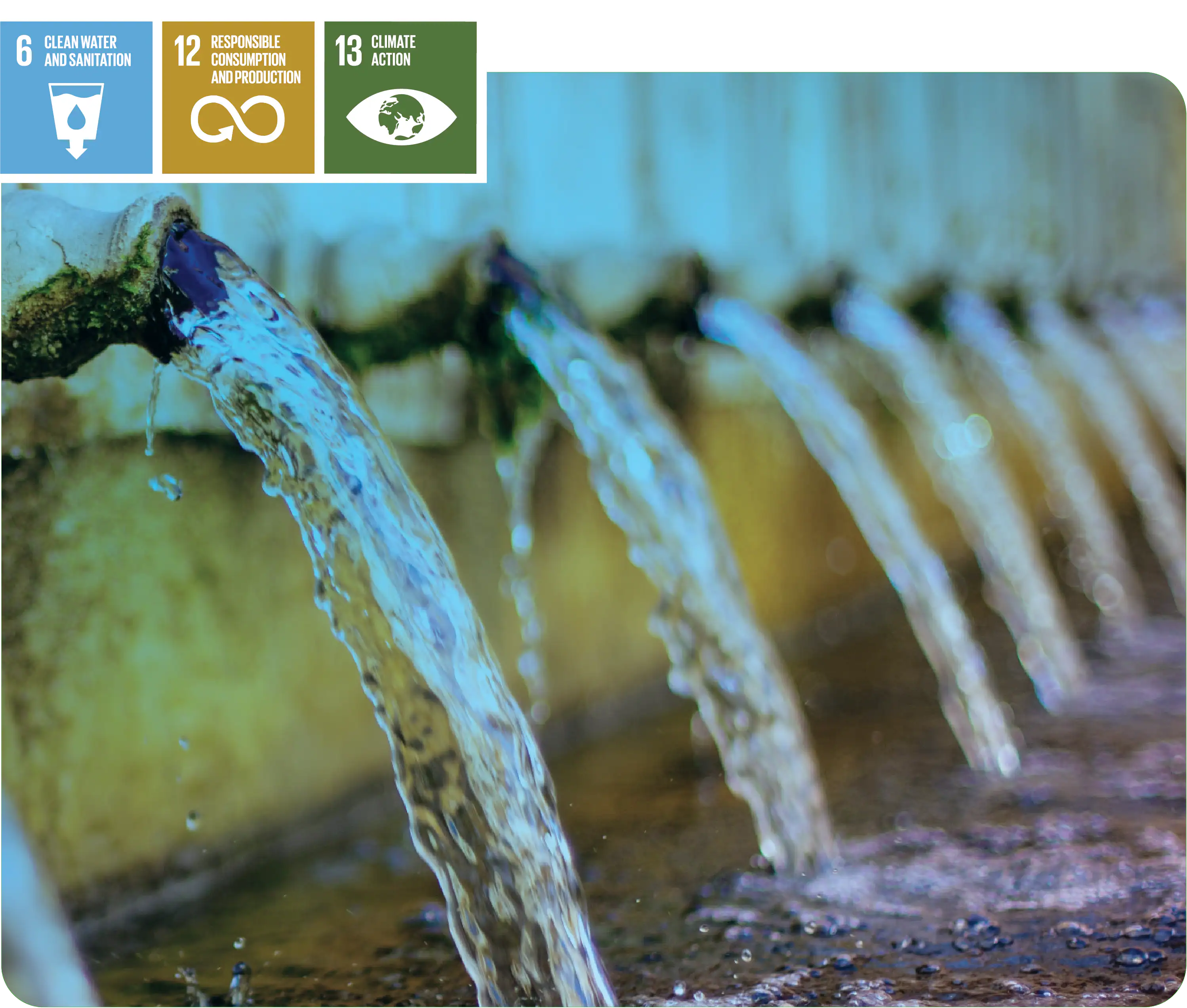
Initiatives
- Maintenance of rainwater harvesting structures, groundwater recharging structures and recharge pits
- Installation of water efficient fixtures (water efficient faucets, sensor based taps etc.)
- Maintenance of sewage treatment plant and water recycling infrastructure
- Installation of digital water metres and its calibration
- Water quality monitoring
- Water treatment plants

Waste Management
TCS focuses on waste reduction at source, segregation, recycling, and safe disposal across its operations. TCS is committed to the circular economy principles, including minimisation of waste disposed to landfill, responsible management of e-waste, battery waste and hazardous waste by engagement with authorised recyclers and resellers for appropriate recovery/reuse. TCS is also committed to advancing zero waste to landfill practices across its operations. 9 TCS locations are already certified for ‘Zero Waste to Landfill’ with 99*% of waste diverted away from landfill and more locations are planned.
*does not include garden waste and C&D waste
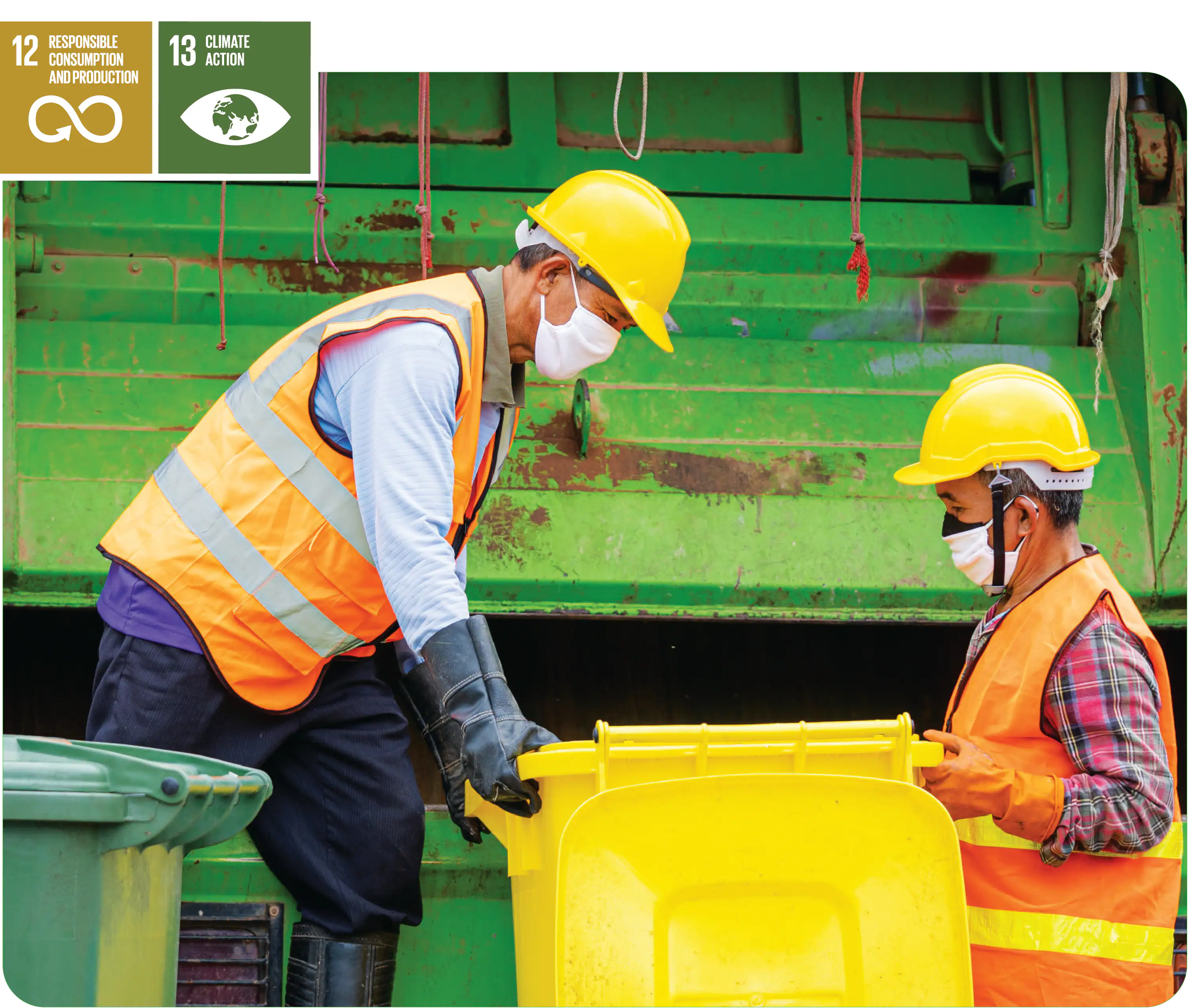
Initiatives
- Installation of recycled plastic benches in recreational areas
- Installation of Organic Waste Converters
- Disposal of non-recyclable/ unsegregated waste through waste to energy plant at few campuses.

Biodiversity
Tata Group’s Project Aalingana emphasises the need to manage company’s impacts and dependencies on biodiversity and enhance their performance on biodiversity conservation. TCS Nature and Biodiversity policy outlines TCS’ commitment and plan of action to conserve, preserve and enhance nature and biodiversity.
During the year, the Company has conducted biodiversity assessment of campuses and raised employee awareness through sessions, webinars and nature walks/ trails. TCS’ flora and fauna conservation initiatives at campus level include:
Flora
- Protection of native plant species and transplantation of trees during construction phase
- Provision of Green House/ Nursery/ Indoor plants
- Creation/ Restoration/ Protection of habitats
- Greening the office programme/ Plantation drive
- Protection/Plantation Native Flowering/Fruit Trees
- Establishment of medicinal garden
Fauna
- Protection of Rare, Endangered & Threatened (RET) species
- Conservation of Bat Colony
- Creation of Butterfly Zone
- Bird habitat improvement programme
- Care for Nature programme
- Wildlife rescue and release